Home / Blog
August 21, 2026
6 min read
Do You Actually Need a Radiation Emergency Kit? Here’s How to Tell
Key Takeaways
- Most people do not automatically need a radiation emergency kit. Its value depends on the type of risk involved and how it fits into a broader emergency plan.
- Potassium iodide protects only the thyroid from radioactive iodine. It does not protect the whole body or cover every radiation emergency.
- During most radiation emergencies, getting inside, staying inside and following official updates should come before medication.
Why This Question Is Coming Up Now
Radiation emergencies occupy an awkward corner of preparedness: they are unlikely for most people, but serious enough that a worrying headline can make specialist supplies feel urgently necessary.
Online advice rarely makes that decision easier. Official resources tend to focus on immediate safety instructions, while prepper content can make every scenario sound catastrophic.
The more useful question is not whether a nuclear or radiological emergency is theoretically possible. It is whether a medical kit would address a credible risk in your circumstances, and whether you understand what the medications can and cannot do.
Preparation can be sensible. Panic-buying medication you may never need, or may use in the wrong situation, is not the same thing.
What a Radiation Emergency Actually Looks Like
A radiation emergency is not one single event, and no medication is useful in every scenario.
A nuclear power plant incident may release radioactive materials, while an accident involving materials used in healthcare, research, manufacturing or transport may be smaller and more localised. A dirty bomb uses conventional explosives to spread radioactive material; it is not the same as a nuclear detonation, which can also produce intense heat, blast damage and radioactive fallout. It also helps todistinguishexposurefromcontamination.
Exposuremeans radiation energy has reached the body.Contaminationmeans radioactive material is on the skin, clothing or inside the body. The right response depends on which has occurred and which material is involved.
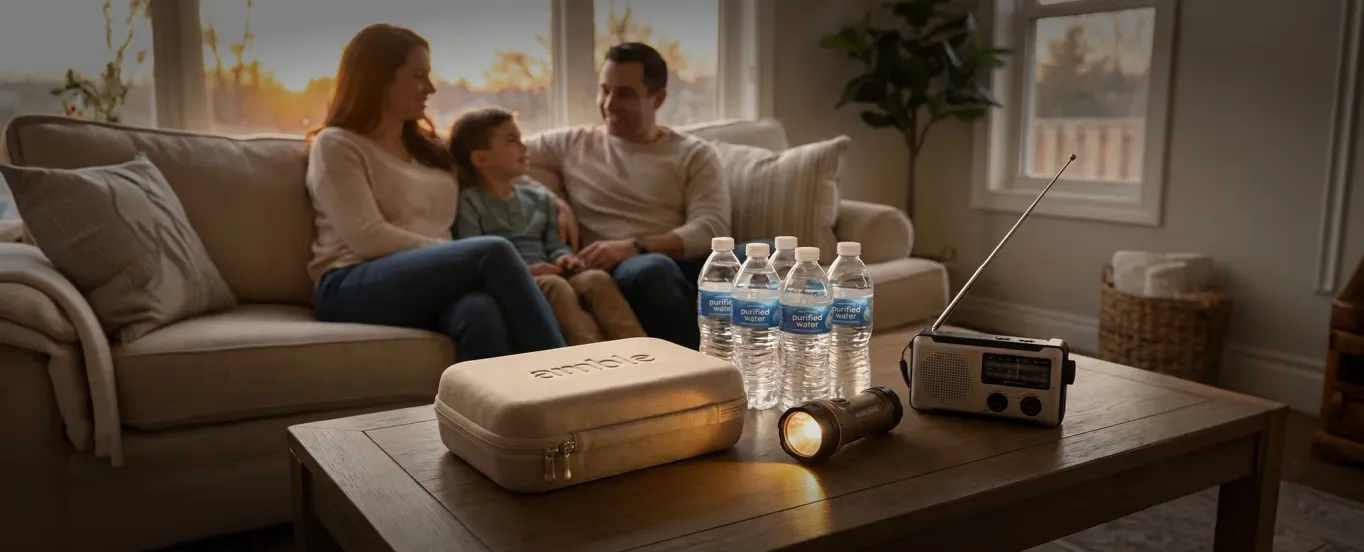
Across most radiation emergencies, the core advice is straightforward:get inside, stay inside and stay tunedfor instructions from emergency officials.A basic household planshould also include water, essential medications, batteries and a battery-powered or hand-crank radio, not just specialist medical supplies.
The Big Myth: “Potassium Iodide Protects You From Radiation”
Potassium iodideprotects only the thyroid gland from radioactive iodine. It does not protect any other part of the body or guard against other types of radiation.
The thyroid naturally absorbs iodine and cannot distinguish between stable iodine and its radioactive form. Potassium iodide, usually shortened to KI, supplies the thyroid with stable iodine. This reduces the amount of radioactive iodine the gland may absorb during a relevant emergency.
That role is much narrower than the phrase “radiation pill” suggests.
KI does not shield the body from external radiation, remove other radioactive materials or reverse harm that has already occurred. It also does not prevent or treat acute radiation syndrome. If radioactive iodine is not involved, taking KI will not provide the intended protection.
KI should therefore be used only when advised by public health officials or a qualified healthcare professional. It is an additional protective measure for specific circumstances, not a substitute for getting indoors, evacuating when instructed or seeking emergency medical care.
So Who Actually Needs a Kit?
Its relevance depends on the type of risk involved, access to care and the role it would play within a broader preparedness plan.
Proximity, occupation and frequent flying
Living near a nuclear facility, working with radioactive materials and flying regularly can all make radiation feel more personally relevant. However, these circumstances involve different types of exposure and do not create the same reason to keep emergency medication at home.
| Circumstance | Why radiation may be relevant | What it means for a kit |
|---|---|---|
| Living near a nuclear facility | Local emergency planning may account for the possible release of radioactive materials | Check guidance from local authorities. Proximity does not mean every medication in a kit would be relevant |
| Working with radiation | The risks depend on the materials, equipment and processes involved | Workplace safety, occupational health and incident-response procedures should come first |
| Flying frequently | Spending more time at altitude increases cumulative exposure to cosmic radiation | The medications in a radiation emergency kit do not protect against cosmic radiation, so flying alone is not a reason to own one |
The important distinction is between experiencing more radiation exposure and facing an emergency that these particular medications can address.The FAA provides tools and researchfor calculating cosmic-radiation exposure during air travel, but KI and Prussian blue do not block that form of radiation.
General household preparedness mindset
Some people prepare for several low-probability but high-impact emergencies, particularly if they live remotely, travel often or worry that access to pharmacies and healthcare could be disrupted.
A medical kit can form one limited part of that plan. It should sit alongside practical basics such as water, communication, sheltering knowledge and an adequate supply of everyday medications.
Peace of mind is a reasonable consideration, provided it comes from understanding what is in the kit rather than assuming it provides complete protection. Medication stockpiling without a clear plan can create confusion instead of reducing it.
When it’s genuinely unnecessary
A radiation emergency kit is unlikely to add much value if the interest comes solely from a frightening headline, with no credible local, occupational or access-related concern behind it.
It is also unnecessary when someone expects KI to protect against every nuclear threat or assumes the complete kit can replace evacuation, sheltering or hospital treatment. Each medication has a specific role, and some radiation emergencies may involve none of the materials those medications address.
Beyond Potassium Iodide: What Else Matters
Different radioactive materials require different medical responses, which is why potassium iodide provides only one part of the picture.
| Medication | Specific role | What it does not do |
|---|---|---|
| Potassium iodide | Helps protect the thyroid when radioactive iodine is involved | Does not protect the whole body or address other radioactive materials |
| Prussian blue | Helps remove certain radioactive forms of cesium and thallium from inside the body | Does not remove every type of radioactive contaminant |
| Ondansetron | Helps manage nausea and vomiting | Does not block radiation or treat radiation injury itself |
Radiogardase is the FDA-approved brand-name form of Prussian blue used for certain cases of internal contamination with radioactive cesium or thallium. Prussian blue works by trapping those materials in the intestines so the body can remove them. It is not a general-purpose radiation antidote.
Other contaminants and radiation injuries can require entirely different hospital-based treatments. OurRadiation Emergency Kitbrings together medications with different, situation-specific roles in one provider-prescribed kit.
Why This Isn’t a DIY Purchase
A radiation emergency is not the time to guess which radioactive material is involved or assume that every medication in a kit serves the same purpose.
The complete Amble kit contains prescription medications, and suitability can depend on factors such as your health history, allergies and current medications. To get started, you complete an online medical intake. A licensed provider then reviews your information and decides whether the kit is appropriate to prescribe. If approved, it is shipped directly to you.
That review does not replace official guidance during an actual emergency. The medications should only be used under appropriate medical, toxicological or public health guidance, and using them should never delay sheltering or emergency care.
The Amble Approach
What’s Included and How It Works
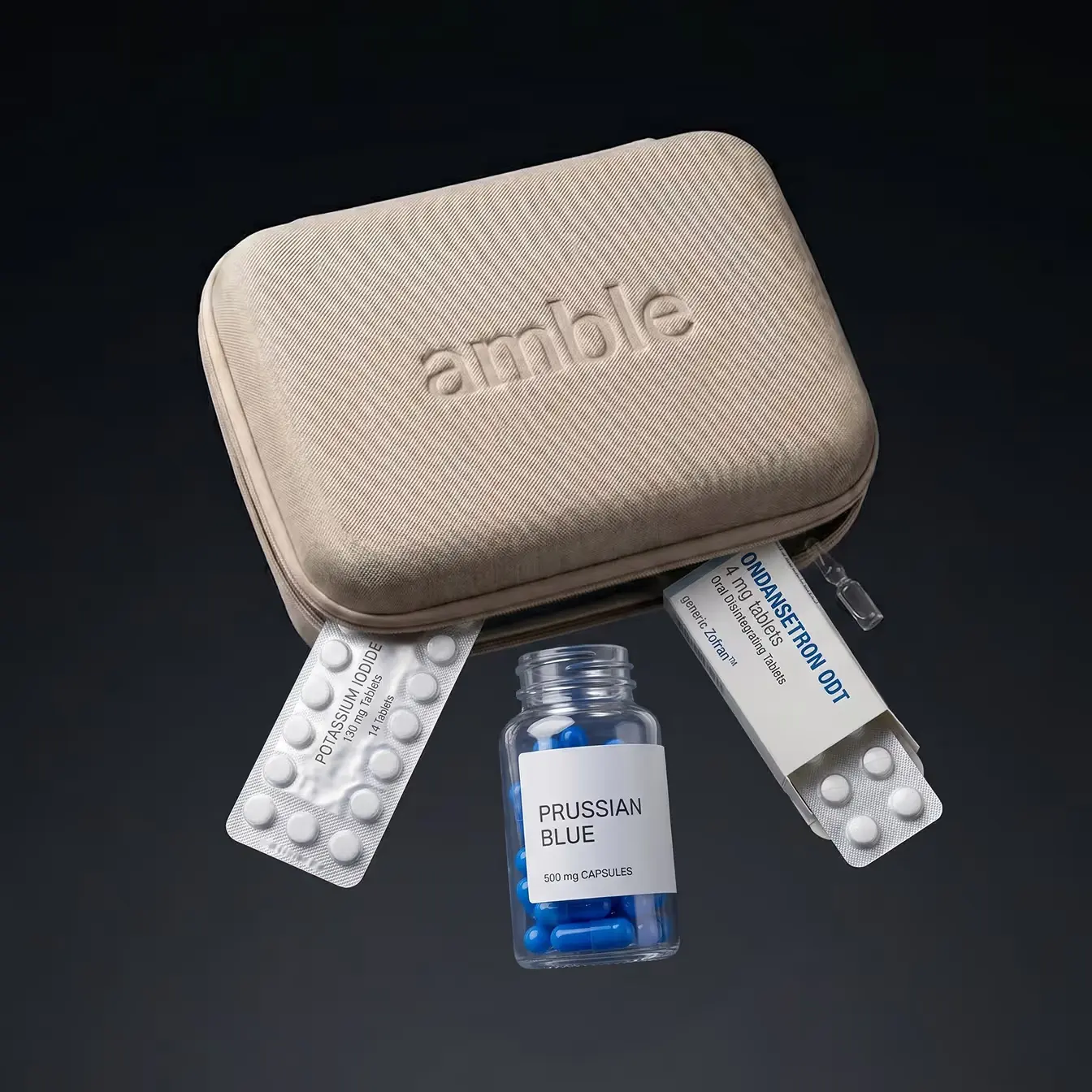
Amble’s Radiation Emergency Kit, also known as the “Oh Sh*t Kit,” includes potassium iodide, Prussian blue and ondansetron. Each medication has a different and limited role, from protecting the thyroid in radioactive iodine scenarios to addressing certain internal contaminants or helping manage nausea and vomiting.
The kit is intended for responsible preparedness when immediate access to medical care may be limited. It is not a complete treatment for radiation exposure, and it does not replace sheltering, evacuation or hospital care.
Every kit requires review by a licensed medical provider and is prescribed only when the provider determines it is appropriate.
Pricing and Access
The Radiation Emergency Kit costs aflat $345, with no subscription required. It is HSA and FSA eligible.
Complete the online intake, submit your health information for licensed-provider review and, if prescribed, the kit will be shipped directly to you.
References
https://www.cdc.gov/radiation-emergencies/safety/index.html
https://www.cdc.gov/radiation-emergencies/infographic/contamination-versus-exposure.html
https://www.cdc.gov/radiation-emergencies/response/index.html
https://www.cdc.gov/radiation-emergencies/treatment/potassium-iodide.html
https://www.faa.gov/data_research/research/med_humanfacs/aeromedical/radiobiology?
Your questions,
answered.
Do I need a radiation emergency kit at home?
Not necessarily. Most households do not automatically need one. A kit may be worth considering based on local emergency risks, relevant occupational exposure, limited access to care or a broader household preparedness plan.
Does potassium iodide protect against every kind of radiation?
No. Potassium iodide protects only the thyroid from radioactive iodine. It does not protect the rest of the body, block external radiation or guard against other radioactive materials.
Does frequent flying mean I need a radiation emergency kit?
No. Frequent flyers receive more cosmic-radiation exposure than people who rarely fly, but the medications in this kit do not protect against cosmic radiation. Flying regularly may make radiation exposure more personally relevant, but it does not make the kit medically necessary by itself.
What should I do first during a radiation emergency?
Get inside, stay inside and follow instructions from public health or emergency officials. Do not delay sheltering or leave a safe location to search for medication. Only take potassium iodide when advised by a healthcare professional, public health official or emergency authority.Useful preparation starts with understanding your actual risks and what each protective measure can realistically do.
Still have questions?