Home / Blog
August 21, 2026
6 min read
Why Every Home Needs an Emergency Medication Kit (and What Should Be In It)
Key Takeaways
- An emergency medication kit helps your household stay prepared when pharmacies, appointments or routine healthcare are harder to access.
- A well-maintained kit should include everyday prescriptions, suitable over-the-counter essentials and an up-to-date record of medications, allergies and prescriber details.
- Provider-reviewed telehealth services can offer a legitimate way to obtain prescription medications in advance, even without an established relationship with a local doctor.
Why Every Home Should Have One
An emergency medication kit gives your household a practical backup when normal healthcare is temporarily harder to reach. That could mean getting sick after clinic hours, living far from the nearest pharmacy, or dealing with severe weather, transport problems or another disruption that delays routine care.
The point is not to prepare for an unlikely disaster. It is to avoid scrambling for basic supplies while someone is already unwell. A stocked, regularly checked kit can help you manage common symptoms, keep essential medication information in one place and bridge short gaps until professional care is available.
This is especially useful for households managing ongoing prescriptions or living in areas where same-day appointments are difficult to get. Preparing in advance makes it easier to respond calmly, rather than relying on whichever pharmacy happens to be open or trying to arrange care at the worst possible time.
This is one practical part of emergency planning, alongside food, water, first-aid supplies and other essentials recommended inReady.gov’s emergency kit guidance.
What Most Emergency Kit Advice Gets Right
Most emergency kit guidance gets the foundations right. A useful home kit should include suitable over-the-counter essentials, such as pain relievers, antihistamines and antidiarrheals, alongside any routine medications household members rely on.
For ongoing prescriptions, speak with the relevant prescriber or pharmacist about what emergency supply is appropriate. It also helps to keep a written record of each person’s medications, prescribed dosages, allergies, health conditions and prescriber or pharmacy contact details. This keeps existing instructions accessible rather than creating new ones.
Storage is important too. Keep medicines in their original labelled packaging where possible and follow the specific temperature and storage instructions for each product. Avoid inappropriate heat, moisture and temperature extremes, and store everything securely away from children and pets.
MemorialCare recommendschecking medication expiration dates regularly and replacing emergency supplies before they are no longer usable.
The Gap Most Advice Leaves Out
Most emergency kit guides cover storage and OTC basics but stop short of prescription-level illness coverage.
Over-the-counter medications can help manage certain symptoms, but they are not substitutes for prescription treatment. Some bacterial, viral, parasitic and fungal illnesses may require an assessment and medication that cannot simply be added to a shopping basket.
This is where otherwise practical advice often becomes less useful. Telling someone to “ask your doctor” assumes they have an established provider, can get an appointment and can reach a pharmacy without delay. That may not be realistic after hours, in a rural area or during a temporary disruption to local services.
The missing piece is not a drawer full of leftover prescriptions or medication bought without proper oversight. It is a legitimate way to prepare appropriate prescription coverage in advance, with a licensed provider reviewing the individual’s health information before deciding what can safely be prescribed.
How People Actually Get Prescription Coverage Without a Standing Doctor Relationship
Telehealth-based provider review can make it possible to get emergency prescription medications on hand without an existing relationship with a local doctor.
The process usually begins with an online medical intake covering health history, current medications, allergies and other information relevant to prescribing. A licensed provider then reviews the submission and decides whether the requested medications are appropriate for that individual. Approval is not automatic.
When a prescription is approved, the medication can be fulfilled and shipped directly to the patient. This creates a practical route to preparing before healthcare access becomes difficult, without removing clinical oversight from the process.
We use this model for ourJust in Case Kit. Patients complete an online intake, receive a licensed provider review and, if prescribed, have the kit shipped to them free.
What a Broad-Coverage Kit Should Address
A broad-coverage emergency medication kit should account for more than one type of illness. Different health problems may require entirely different forms of treatment, even when the early symptoms seem similar.
Useful coverage may include prescription options for certain bacterial infections, viral illnesses, parasitic conditions and fungal infections, alongside medication that can help manage nausea and vomiting. The aim is not to collect as many medicines as possible. It is to prepare across several distinct categories rather than relying on multiple products that all address the same narrow problem.
That breadth still has limits. No single medication is appropriate for every infection, and having treatment available does not remove the need to follow the prescribing provider’s instructions. A well-built kit should offer practical range while remaining specific to the person it was prescribed for.
Why This Isn’t a DIY Stockpile
Emergency preparedness is not the same as collecting leftover prescriptions or buying medication without appropriate oversight.
Prescription medicines can interact with other treatments, trigger allergic reactions or be unsuitable for certain health conditions. Different illnesses can also produce similar symptoms, and not every infection is bacterial or requires an antibiotic.
That is why a provider-reviewed kit is prescribed for an individual rather than assembled through guesswork. The medications should only be used by the person they were prescribed for and according to the instructions supplied with them.
An emergency medication kit can support short periods when access to care is disrupted, but it does not replace diagnosis, routine healthcare, urgent care or emergency services.
The Amble Approach
What’s Included and How It Works
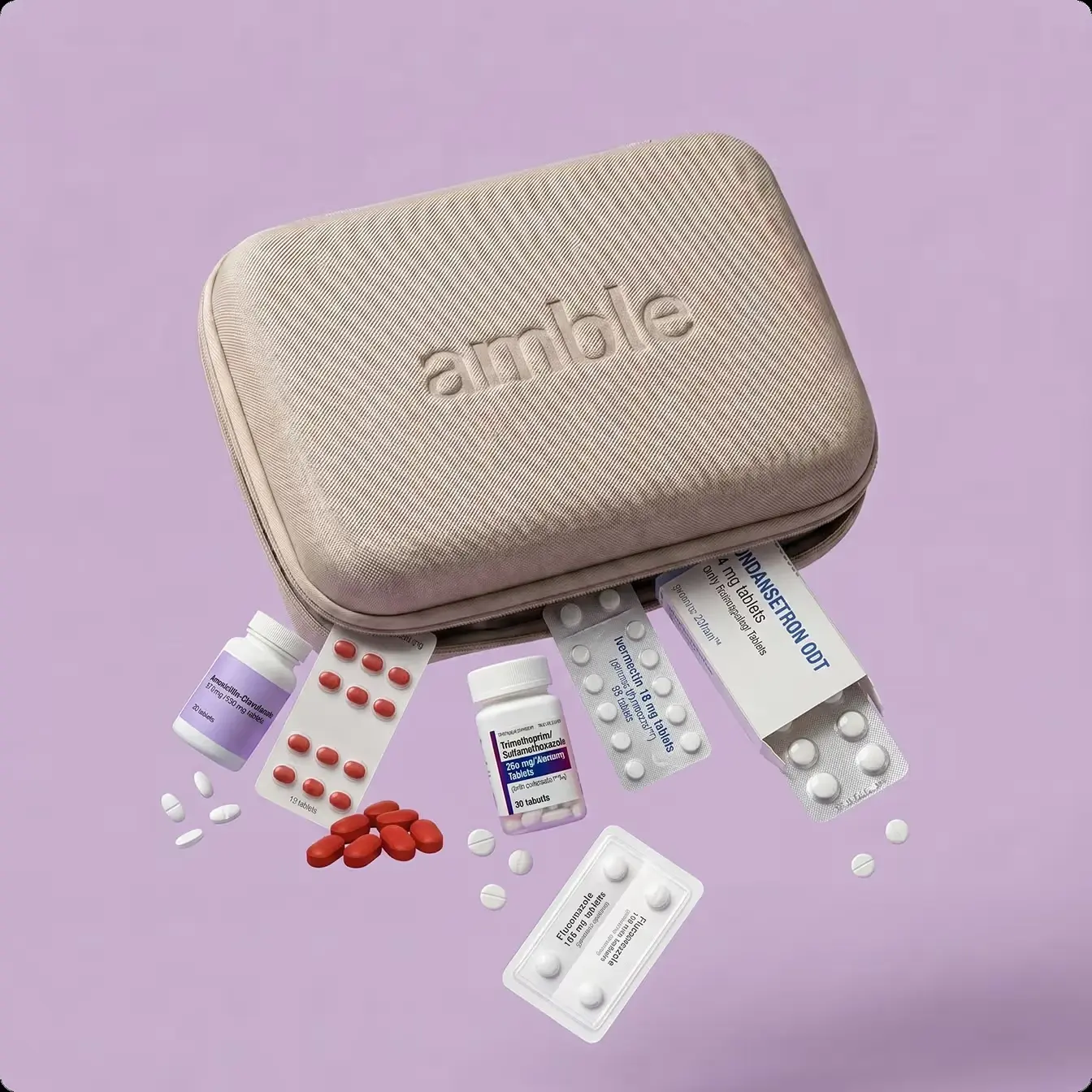
The Just in Case Kit covers nearly 100 illnesses through nine essential prescription medications. These span antibiotics, antivirals, anti-parasitics, antifungals and anti-nausea treatments, creating broader coverage than a standard collection of OTC basics.
The kit is built around four practical benefits: Emergency Readiness, Broad Coverage, Peace of Mind and Provider Reviewed.
Patients begin by completing an online medical intake. A licensed provider reviews the information and decides whether the kit is appropriate to prescribe. If approved, it is shipped directly to the patient at no additional delivery cost.
This keeps the process convenient without removing the clinical review that prescription medication requires.
Pricing and Access
The Just in Case Kit costs a flat$285, with no subscription required. The online intake and licensed provider review are included, and delivery is free if the kit is prescribed. Approval remains subject to the provider’s assessment of the patient’s health information and suitability.
References
Your questions,
answered.
What should be included in an emergency medication kit?
A home emergency medication kit should include any routine prescriptions, suitable over-the-counter basics, a current list of medications and allergies, and the contact details of relevant prescribers or pharmacies. Provider-reviewed prescription coverage may also be appropriate for households preparing for periods when normal healthcare access is limited.
Can I get emergency prescription medications without a primary care doctor?
Yes. A licensed telehealth provider can review your medical intake and decide whether emergency prescription medications are appropriate for you. You do not need an existing relationship with a local doctor, but approval is not automatic and all prescriptions remain subject to clinical review.
How should emergency medications be stored?
Follow the storage instructions on each medication’s label and any guidance provided by the pharmacy or prescriber. Keep medicines in their original packaging where possible, protect them from inappropriate heat and moisture, store them securely away from children and pets, and check expiration dates regularly.
Does an emergency medication kit replace medical care?
No. An emergency medication kit can support short periods when access to care is delayed or disrupted, but it does not replace diagnosis, routine appointments, urgent care or emergency services.
Still have questions?