


Home / Blog
August 21, 2026
7 min read
How to Build a First Aid Kit That Goes Beyond Bandages
Key Takeaways
- A useful first aid kit starts with adhesive bandages, sterile gauze, wound-cleaning supplies, gloves, basic tools, and a durable, clearly labeled container.
- Household medical needs, known allergies, travel plans, and outdoor activities can affect what belongs in your kit and where it should be stored.
- Basic supplies cannot address every injury or reaction. Provider-reviewed prescription and nonprescription items can support broader preparedness, but they do not replace professional or emergency medical care.
The First Aid Kit Basics Everyone Recommends
A reliable first aid kit should cover common minor injuries and makeessential supplieseasy to find when they are needed. The basics include:
- Adhesive bandages in several sizes
- Sterile gauze pads and medical tape
- Antiseptic wipes or other wound-cleaning supplies
- Antibiotic ointment
- Disposable gloves
- Tweezers
- Scissors
- A cold pack
- A simple first aid guide
Keep everything in a durable, clearly labeled container with separate compartments where possible. This makes it easier to find the right item quickly and spot anything that needs replacing.
Keep your main kit somewhere accessible to responsible household members, but out of reach of young children. Supplies should stay dry and be protected from extreme heat or cold, particularly if medications are included.
Check the kit regularlyfor expired products, damaged packaging, missing items, or supplies that have already been used. Restocking as you go is usually easier than discovering an empty packet or expired item during an emergency.
These essentials can help with minor cuts, scrapes, and everyday injuries. However, they are only the foundation of a kit and may need to be adapted around the people, activities, and medical needs in your household.
Personalizing Your Kit for Your Household
A home first aid kit should reflect the people who may need to use it.Beyond the standard supplies, consider any known allergies, chronic conditions, age-related needs, and activities that may increase the chance of risk.
For example, a household member with a severe allergy may already have a prescribed epinephrine auto-injector, while someone with diabetes may need condition-specific supplies recommended by their healthcare professional. Families with young children may also need age-appropriate products and a storage setup that keeps medications secure.
Location matters as well. Keep the main kit somewhere easy for responsible household members to access, and consider separate kits for the car, travel, sports, hunting, ranching, or other outdoor activities. Any medications should be stored according to their labels and protected from unsuitable temperatures.
The aim is to make sure the supplies you are most likely to need are organized, current, and suited to your household.
When “Just a Bandage” Isn’t Enough
Bandages and basic wound care supplies can help protect minor cuts and scrapes, but some problems need more than simple first aid.
A wound that becomes increasingly painful, swollen, warm, or red may need medical assessment, especially if the redness is spreading or there is persistent drainage. Deep wounds, uncontrolled bleeding, or injuries with widely separated edges may also require professional treatment rather than home care alone.
The same applies to skin reactions. A mild rash may settle with basic care, but one that continues to spread, becomes painful, or is accompanied by swelling or other worsening symptoms should not be ignored.
Allergic reactions can also escalate quickly. Difficulty breathing, swelling of the face, tongue, or throat, fainting, or rapidly worsening symptoms should be treated as a medical emergency.
A well-planned first aid kit can help you respond to common situations, but it should also make the limits of home treatment clear. Knowing when to stop using basic supplies and seek professional or emergency care is an essential part of being prepared.
The Gap in Most First Aid Advice
Most first aid guides focus on physical supplies such as bandages, gauze, antiseptic products, and basic tools. These items are essential, but they do not explain how provider-reviewed medications may fit into a broader preparedness plan.
For some, having access to prescription and nonprescription items in advance may offer another layer of preparation. However, prescription access still requires an appropriate medical evaluation. It does not mean every future symptom can be diagnosed or treated without professional judgment.
Services that use an online medical intake can make provider review more accessible for people who do not already have an established doctor relationship. Any prescription medication should only be approved when clinically appropriate for the individual and used according to its label and the provider’s instructions. The goal is not to replace medical care. It is to plan beyond basic supplies while keeping clear boundaries around when professional or emergency help is needed.
What’s in Ouch Pouch
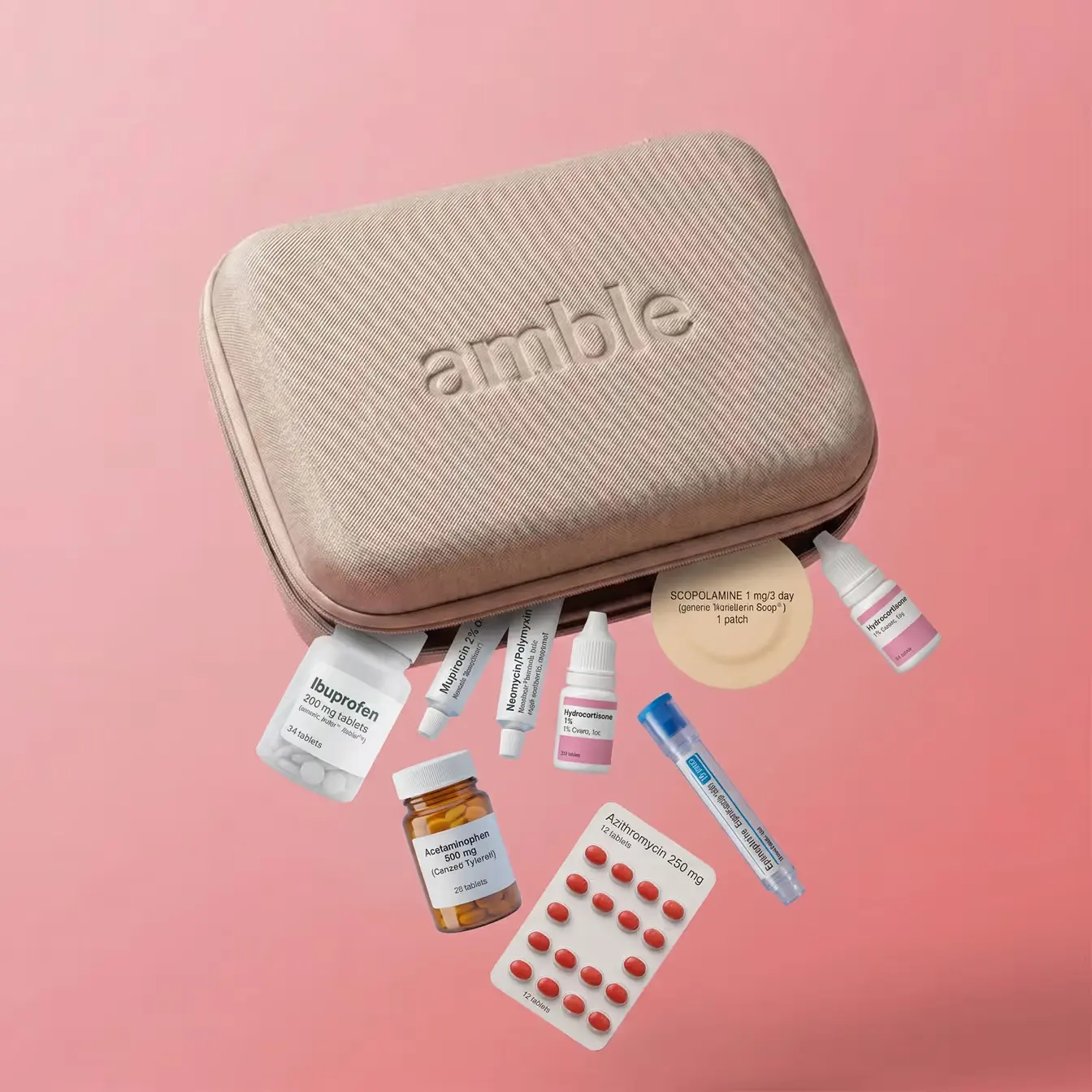
Ouch Pouchis designed to complement standard first aid supplies with a provider-reviewed selection of prescription and nonprescription items. It includes:
- Mupirocin
- Triple antibiotic ointment
- Hydrocortisone
- Diphenhydramine
- Ibuprofen
- Acetaminophen
- Scopolamine patch
- Epinephrine auto-injector
- Azithromycin
The kit includes several medication types, including topical products, common over-the-counter options, and prescription medications. Their inclusion does not mean that every future injury, rash, infection concern, or allergic reaction should be treated without medical guidance. Prescription items require an online medical intake and review by a licensed provider, and any medication should be used only according to its label and the instructions provided.
The kit is intended for people who want to prepare beyond the usual bandages and gauze. That may include families, frequent travelers, people involved in sports, and those who spend time hunting, ranching, or taking part in outdoor activities where convenient access to care may be limited.
Ouch Pouch does not replace an ordinary first aid kit, professional medical assessment, or emergency care. Instead, it adds another provider-reviewed layer to a broader preparedness plan.
Important Disclosures
Ouch Pouch includes both prescription and nonprescription items. Prescription medications are available only after an online medical intake and review by a licensed provider, and approval is not guaranteed.
Any medication included in the kit should be used only by the person for whom it was prescribed and according to its label and the provider’s instructions. Medications should not be shared with other people.
Ouch Pouch is not a substitute for routine medical care, urgent assessment, or emergency treatment. If an epinephrine auto-injector is used for a suspected severe allergic reaction, call 911 immediately, even if symptoms begin to improve. Epinephrine provides emergency first aid but does not replace further medical assessment.
When to Seek Emergency Care
Some injuries and reactions require immediate medical attention rather than home treatment.
Call 911 if someone has difficulty breathing, swelling of the face, tongue, or throat, faints, becomes confused, or develops rapidly worsening symptoms. If an epinephrine auto-injector is used,emergency medical help should still be sought immediately.
Urgent assessment may also be needed for uncontrolled bleeding, deep or widely separated wounds, severe or extensive burns, serious eye or facial injuries, or injuries that affect movement or sensation.
A first aid kit can help you respond in the moment, but it should never delay emergency care when symptoms are severe or worsening.
A well-built first aid kit combines reliable basic supplies, planning for known household needs, and a clear understanding of when professional help is required. For those looking to prepare beyond standard bandages and gauze, Ouch Pouch offers an additional provider-reviewed option.
References
https://www.redcross.org/get-help/how-to-prepare-for-emergencies/anatomy-of-a-first-aid-kit.html
https://www.goodrx.com/health-topic/environmental/build-first-aid-kit
https://abcnews.com/Shop/building-first-aid-kit-home-comprehensive-guide/story?id=112302650
https://dailymed.nlm.nih.gov/dailymed/fda/fdaDrugXsl.cfm?setid=fee44162-aaf2-4e89-9f83-2d3a8ff76760
Your questions,
answered.
What should be in a home first aid kit?
A home first aid kit should include adhesive bandages, sterile gauze, medical tape, wound-cleaning supplies, disposable gloves, tweezers, scissors, and any household-specific items recommended by a healthcare professional.
How often should you check a first aid kit?
Check it regularly for expired products, damaged packaging, missing supplies, and items that have already been used. Medications should also be stored according to their labels.
Can prescription medications be kept in a first aid kit?
Yes, prescription medications can be kept in a first aid kit when they have been prescribed to the individual after appropriate medical review. They should be stored and used according to the prescription label and provider instructions, and should not replace professional or emergency care.
Still have questions?


Ready to recharge at the cellular level
Licensed clinicians. Easy to follow treatments. 100% online.