


Home / Blog
August 21, 2026
5 min read
How to Prevent Traveler's Diarrhea (and What to Pack Just in Case)
Key Takeaways
- Traveler's diarrhea is the most common travel-related illness, with estimated rates of 30% to 70% during a two-week trip depending on the destination and season.
- Drinking safe water, choosing thoroughly cooked food and washing your hands regularly can help reduce your risk.
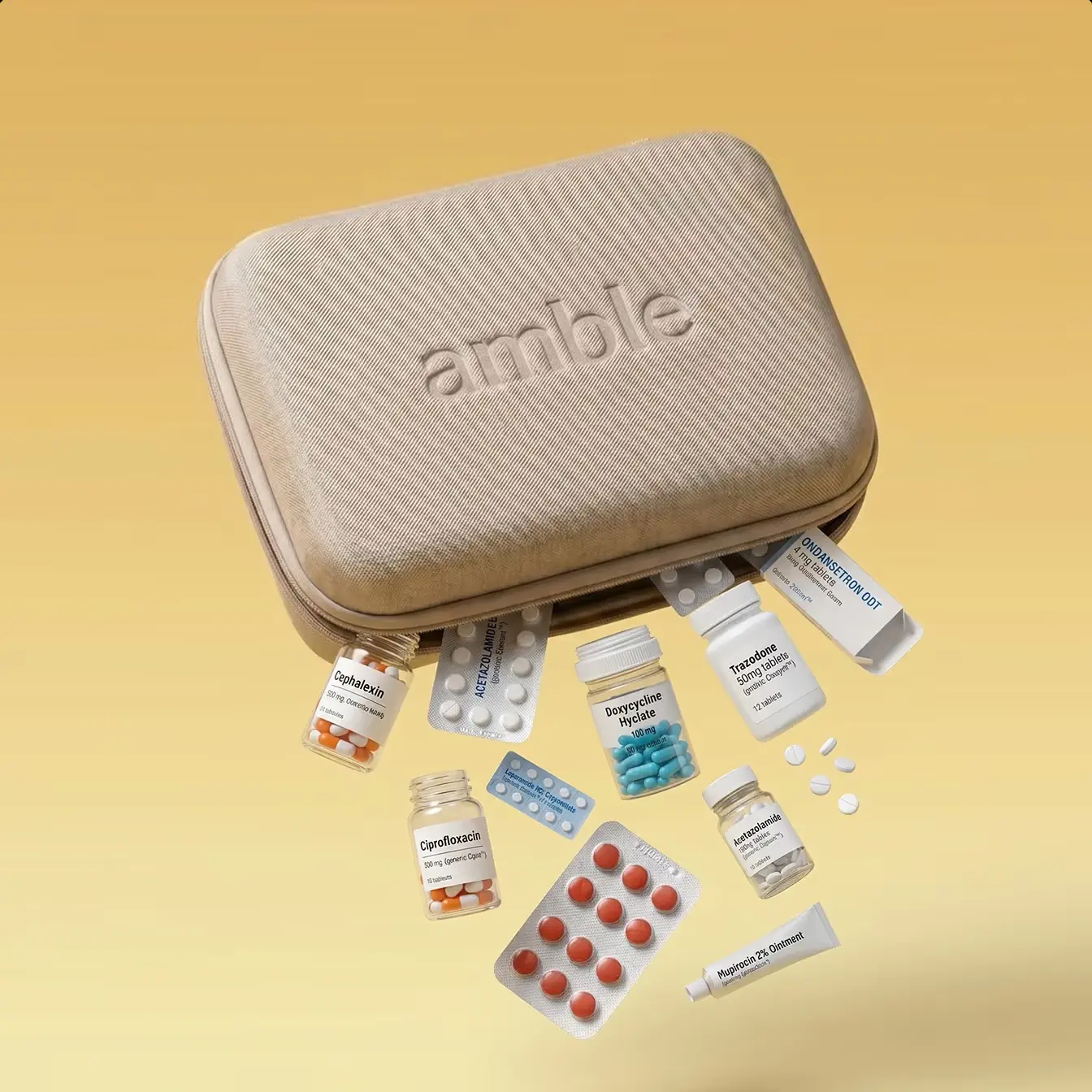
- Amble's Mayday travel kit is prescription-only, reviewed by a licensed provider before shipping, and designed to help eligible travelers prepare for more than digestive symptoms.
Why Traveler's Diarrhea Is So Common
Traveler's diarrhea can affect anestimated 30% to 70% of travelers during a two-week trip, making it the most common travel-related illness. The level of risk varies depending on the destination, season and local food and water conditions.
It is usually caused by consuming food or water contaminated with bacteria, viruses or parasites. Exposure can happen through unsafe drinking water, ice, raw ingredients, undercooked food or utensils and surfaces that have not been cleaned properly.
Even careful travelers cannot control every part of how their food is stored, prepared or served. That is why sensible precautions can lower the risk, but cannot guarantee a completely stomach-trouble-free trip.
Prevention Basics: Food and Water Precautions
The best way to prevent traveler's diarrhea is toreduce your exposure to contaminated food and water.
Choose factory-sealed bottled drinks or properly treated water, and check that the seal is intact before drinking. Use safe water when brushing your teeth, and avoid ice if you are unsure where the water came from.
Food that is thoroughly cooked and served hot is generally a safer choice than food that has been sitting out. Peel fruit yourself where possible, and be cautious with raw salads, unpasteurized dairy products and undercooked meat or seafood. It is also sensible to avoid street food when the hygiene, storage or cooking conditions look uncertain. Wash your hands with soap and water before eating. When that is not available, an alcohol-based hand sanitizer can offer a practical backup.
These precautions can lower your risk, but they cannot remove it entirely. You may not always know how food was stored, prepared or handled before it reached your plate.
When Prevention Isn't Enough
Fast Symptom Relief
If traveler's diarrhea does strike, replacing lost fluids should be the first priority. Water can help with mild symptoms, while anoral rehydration solutioncan replace both fluids and electrolytes when losses are more significant.
Over the counter options such as loperamide or bismuth subsalicylate may help reduce urgency or frequency for some adults. They are not suitable in every situation, particularly when symptoms include blood in the stool or fever, so follow the product guidance and any advice you have received from a healthcare professional.
When It's More Than “Just Diarrhea”
Most mild cases improve without antibiotics. Antibiotics are generally reserved for cases that significantly disrupt planned activities or become severe, rather than being the automatic first response to every stomach problem.
Seek medical care if you experiencebloody or black stools, a high fever, severe abdominal pain, significant dehydration or an inability to keep fluids down.You should also get help if symptoms are worsening, unusually severe or are not improving as expected.
The Gap Most Travel Advice Misses
Most travel advice explains how to lower your risk or tells you to speak with a doctor before you go. What it often leaves out is how to arrange provider-reviewed treatment in advance, especially if you do not already have a travel medicine appointment lined up.
Once you are unwell abroad, finding suitable care can be inconvenient. Medication names may be unfamiliar, access rules can vary, and dealing with a new healthcare system is rarely how anyone wants to spend a trip.
Preparing ahead does not mean taking antibiotics routinely to prevent illness. It means having appropriate options available, with clear instructions from the prescribing provider, in case a relevant health problem develops while you are away.
Beyond Diarrhea: Other Common Travel Surprises
Digestive problems are not the only health issue that can disrupt a trip. Nausea and vomiting can make travel difficult even without diarrhea, while altitude-related symptoms may appear after reaching a higher elevation. Respiratory symptoms and common infections can also develop far from your usual pharmacy or healthcare provider.
This is where broader preparation can be useful. OurMayday kitis designed to help eligible travelers prepare for several common travel-health problems in one place.
It is not intended to cover every possible illness or replace urgent medical care when symptoms are serious.
Why This Isn't a DIY Purchase
Prescription medications should not be selected from a generic travel checklist or bought without an appropriate medical review. A medication that is suitable for one travelermay not be appropriate for anotherbecause of their health history, allergies, current medications or possible interactions.
With Mayday, you complete an online medical intake before a licensed provider reviews your information. Medications are prescribed only when the provider decides they are appropriate, and the kit is shipped following approval.
Having medication available does not mean every symptom should be managed alone. Severe, persistent or worsening symptoms may still require local medical or emergency care while you are away.
The Amble Approach
What's Included and How It Works
Mayday brings together a curated set of prescription medications intended to help eligible travelers prepare for several common health problems away from home.
The kit is designed to offer broader preparation than packing for diarrhea alone, with support for issues such as nausea, altitude-related symptoms, respiratory symptoms and common infections.
Every order begins with an online medical intake and licensed-provider review. If approved, the kit is shipped before your trip with the relevant prescribing information.
Pricing and Access
Mayday costs aflat $325, with no subscription required.
You complete the intake online, a licensed provider reviews your information, and the kit is shipped if you are approved.Get prepared here
References
Your questions,
answered.
What is the best way to prevent traveler's diarrhea?
The most effective approach is to reduce your exposure to contaminated food and water. Choose sealed bottled or properly treated water, avoid uncertain ice, eat food that is thoroughly cooked and served hot, and wash your hands before eating.These steps can lower your risk, but they cannot prevent every case.
What should I pack in case I get traveler's diarrhea?
Useful items may include oral rehydration supplies, hand sanitizer and any over-the-counter or prescription medication that has been confirmed as suitable for you. Preparing before departure can make it easier to manage symptoms without searching for unfamiliar products while you are already unwell.
Should I take antibiotics to prevent traveler's diarrhea?
Antibiotics are not generally recommended as routine prevention for most travelers. Using them unnecessarily can cause side effects and contribute to antibiotic resistance. A provider may instead recommend carrying treatment for use only if certain symptoms develop. Follow the instructions supplied by the prescribing healthcare professional.
When should I see a doctor for traveler's diarrhea?
Seek medical care for bloody or black stools, high fever, severe abdominal pain, significant dehydration or an inability to keep fluids down. You should also get help if symptoms are worsening, unusually severe or not improving as expected.
Still have questions?


Ready to recharge at the cellular level
Licensed clinicians. Easy to follow treatments. 100% online.