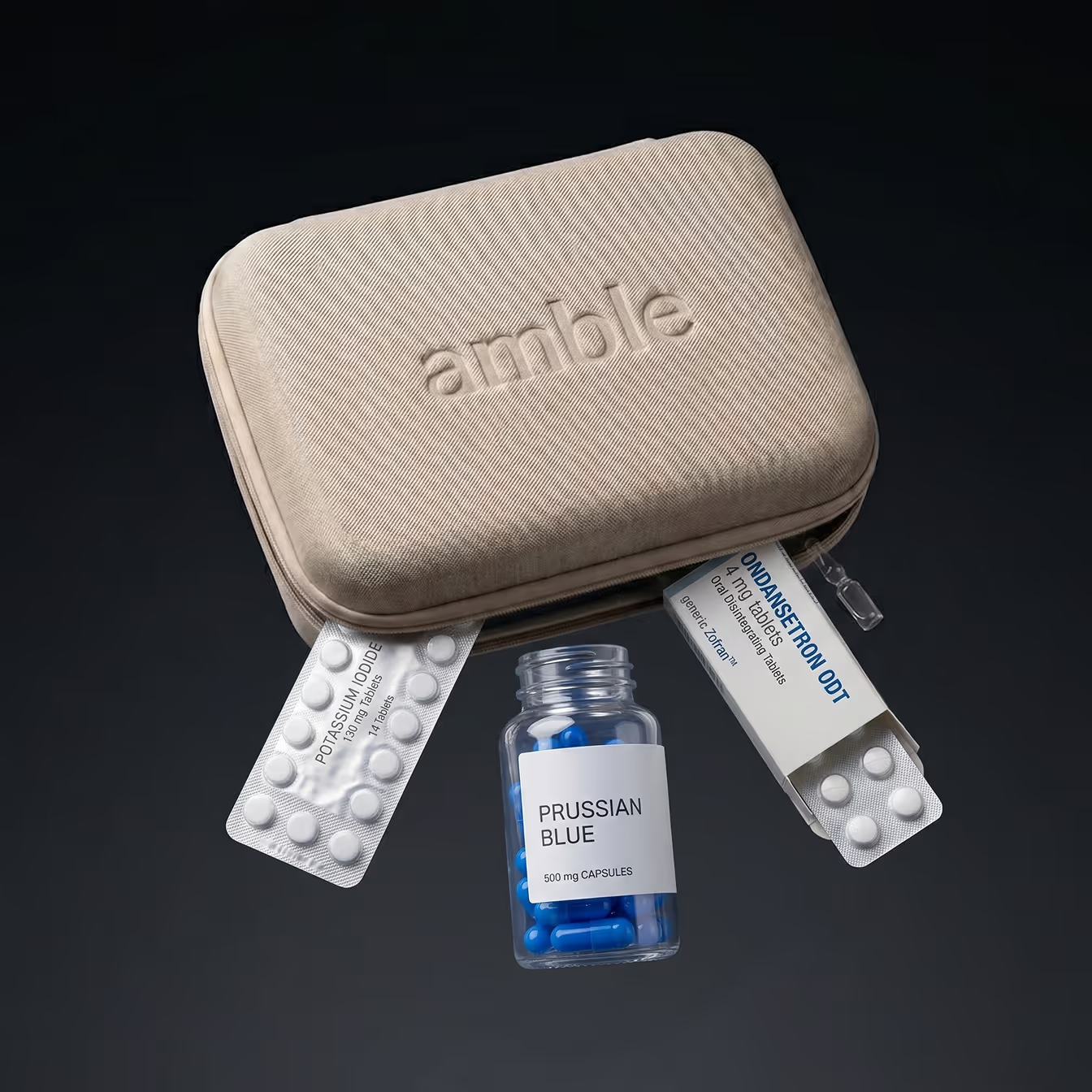
Prescription required. A licensed provider determines eligibility and treatment; kit contents may vary. Use only as directed and do not share medications. Amble does not provide medical care or dispense medications; care and prescriptions are provided by licensed providers and pharmacies. Compounded medications, if prescribed, are not FDA approved or reviewed for safety, effectiveness, or quality.



Radiation Emergency Kit
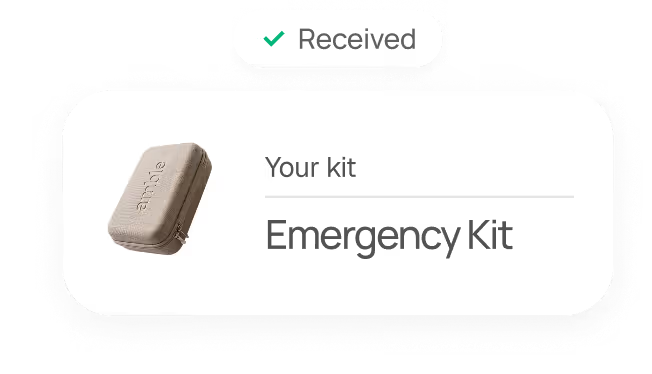
Oh Sh*t Kit
The Oh Sh*t Kit is built for one specific emergency: radiation exposure. If the unthinkable happens, whether from an accident, disaster, or other radiological event, having the right medications on hand can make a critical difference in the earliest hours. Because when radiation is involved panic is optional, but preparation isn’t.
- Includes essential emergency preparedness medications for radiological exposure scenarios
- Prescribed by a licensed medical provider
- Preparedness-focused support when immediate access to care may be limited

Prescription required. A licensed provider determines eligibility and treatment; kit contents may vary. Use only as directed and do not share medications. Amble does not provide medical care or dispense medications; care and prescriptions are provided by licensed providers and pharmacies. Compounded medications, if prescribed, are not FDA approved or reviewed for safety, effectiveness, or quality.
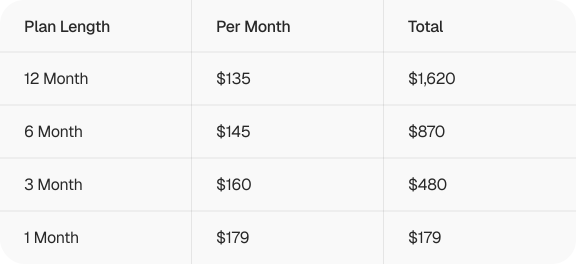
How do I order?
Click Get Started to begin the process. Next you will answer some questions about your health history, medical allergies, and lifestyle via our online medical intake. A licensed medical provider will then review your information and determine if the Kit is right for you. If prescribed, your Kit is shipped directly to your door at no extra cost.
Can I order refills?
You can order an Amble Med Kit annually for each person in your household that meets our requirements. You can order an additional Med Kit to keep at a different location. This will allow you to order up to 4 full Med Kits per year, per person, providing they are kept at different locations. Important Note: We do not condone the stockpiling of medications. Medications purchased through Amble are for the sole purpose of having the appropriate emergency medications on hand when and where you need them, and only should be used in the event you cannot access medical help.
Can I order multiple kits?
Yes. You are eligible to purchase an Amble Med Kit for additional locations. For those who have a legitimate reason to own an additional Med Kit, you can apply for approval during the standard checkout process.
Example of eligible situations:
• Store in your vehicle
• Second home address
• RV or Motorhome
• Cabin
• Boat or Houseboat
• Office/Work
Medication and packaging may vary based on your personalized treatment plan and prescription. Compounded products are not approved or evaluated for safety, efficacy, or quality by the FDA.
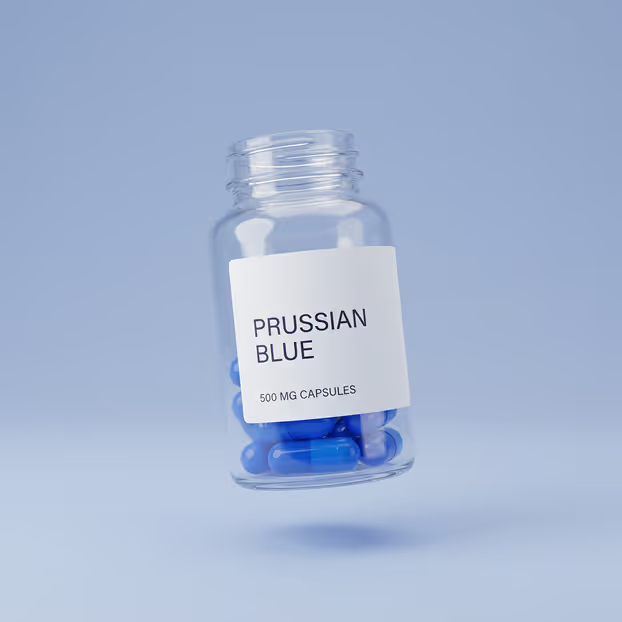
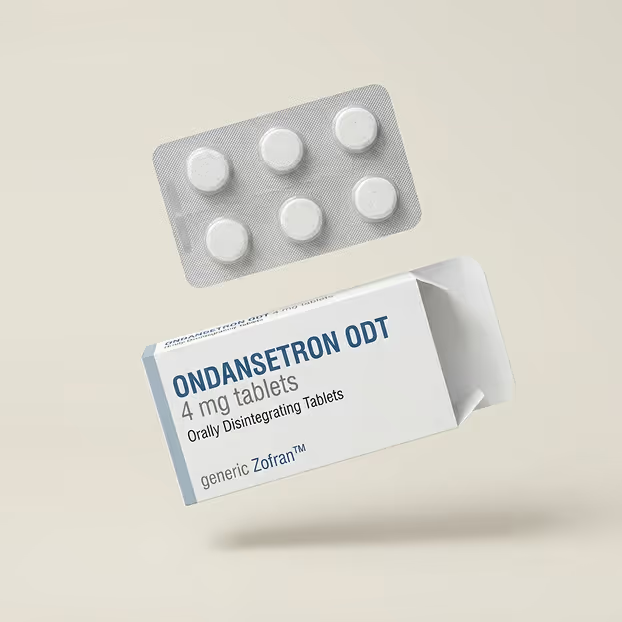
Whats included

How it works
Free assessment, 100% online
Answer some questions about your health history, lifestyle, and goals via our online medical intake.
Prescription
A licensed medical provider will review your information and determine if the medication is right for you.
Free delivery
If prescribed, your medication is cold-shipped directly to your door at no extra cost.

Radiation Ready
Prepared for the moments that matter most.

Critical Early Support
Essential medications when timing is everything.

Peace of Mind
Know you're ready for the unexpected.

Provider Prescribed
Reviewed by a licensed medical provider and tailored to you.

Why Amble?
Doctor-trusted medication
Licensed physicians

On-going support

Your questions, answered.
Who can order an Amble Med Kit?
This is an RX product. To ensure compliance, orders are limited to you or a dependent using your verified email. To order for others, please purchase a gift card or contact Customer Service.
How do I store my kit?
It is recommended to store medications in air-tight containers in a cool and dry environment. However, storage requirements can vary for different medications, so we recommend consulting with your healthcare professional regarding proper storage conditions.
How long can the medications be stored?
Regulations require a pharmacist to place an expiration date of one year on most medications that they dispense. Remember to always store your medication in a cool dry place to maximize its viability.
Does Amble encourage stockpiling medications?
No, Amble does not encourage or condone the stockpiling of medications. Our emergency Med Kits are intended solely for limited and responsible preparedness in case of unexpected emergencies or disasters where access to medical care may be limited.
How often can I reorder my medications
You can order an Amble Med Kit annually for each person in your household that meets our requirements. You can order an additional Med Kit to keep at a different location. This will allow you to order up to 4 full Med Kits per year, per person, providing they are kept at different locations.
What if I have an allergy to a specific medication in the kit?
If you have a known allergy to medication, you can note that during the enrollment process. Based on the medical history and allergy information provided during the enrollment process, one or more medications may not be prescribed in your kit without substitution.
Can I share my kit with other family members?
Amble only offers individual kits that are prescribed to the individual who filled out the order form. The physicians prescribe based upon the answers to the questions on that form. If there is an allergy notated on the form, we need to account for that allergy and make sure that others are not using the medications that could potentially be harmful to them. These are emergency medications and should be treated the same way as any other prescription that is prescribed by a physician.
Can I order multiple kits?
Yes. You are eligible to purchase an Amble Med Kit for additional locations. For those who have a legitimate reason to own an additional Med Kit, you can apply for approval during the standard checkout process.
Example of eligible situations:
• Store in your vehicle
• Second home address
• RV or Motorhome
• Cabin
• Boat or Houseboat
• Office/Work
Can I order refills?
You can order an Amble Med Kit annually for each person in your household that meets our requirements. You can order an additional Med Kit to keep at a different location. This will allow you to order up to 4 full Med Kits per year, per person, providing they are kept at different locations. Important Note: We do not condone the stockpiling of medications. Medications purchased through Amble are for the sole purpose of having the appropriate emergency medications on hand when and where you need them, and only should be used in the event you cannot access medical help.
Do I need insurance?
No, Amble does not require insurance. We provide transparent, all-inclusive pricing for your care. This includes comprehensive clinical support — ongoing provider oversight, direct access to your care team through secure messaging, and regular medication shipments. Our goal is to ensure you receive continuous medical guidance and support throughout your treatment.

Medication Guide
General Disclaimer
These medications should always be used responsibly and after consultation with a qualified healthcare professional or primary care provider for diagnosis and treatment instructions before utilizing any medications in your kit. If you have any questions, Amble offers a team of licensed medical professionals to help.
Storage Information
Most solid oral drugs have a longer shelf life when stored at room temperature (68–77°F / 20–25°C) and shielded from UV radiation in airtight containers. The FDA's Shelf-Life Extension Program showed that many solid form medications stayed potent beyond their expiration date.
Medication Information
POTASSIUM IODIDE
(generic iOSAT/ThyroSafe)
Pharmacologic Category: Thyroid blocking agent; radiation medical countermeasure
FDA-Approved Uses:
- Helps prevent radioactive iodine from getting into the thyroid gland during a nuclear radiation emergency
- Use along with other emergency measures recommended by public officials
Common Off-Label Uses:Use is generally limited to public health, radiation emergency, or toxicologic guidance. Potassium iodide should not be used for routine "radiation protection" or for exposure to radioactive materials other than radioactive iodine.
Typical Adult Dosing:
Thyroid Block (After nuclear radiation emergency)1 pill by mouth 1 time per day, continue daily for 10–14 days or until directed by public health officials or risk of exposure has passed
Pregnancy: Pregnancy Risk Category D (see Appendix A). Potassium iodide is approved for use during a nuclear radiation emergency. Pregnant patients are at higher risk of developing thyroid dysfunction and thyroid cancer and should be prioritized for treatment.
Breastfeeding: Potassium iodide is present in breast milk. This medication is approved for use during a nuclear radiation emergency. Breastfeeding patients are at higher risk of developing thyroid dysfunction and thyroid cancer and should be prioritized for treatment.
Notes:
- Potassium Iodide protects only the thyroid gland from radioactive iodine. It does not protect the rest of the body and does not protect against other radioactive materials.
- Potassium Iodide is most effective when taken within 24 hours before or within 4 hours after radioactive iodine exposure.
- Do not take Potassium Iodide unless instructed by public health officials or a medical provider.
- Potassium Iodide does not reverse thyroid damage that has already occurred and may not provide complete thyroid protection.
Common Side Effects: Heart rate irregularity, numbness and tingling, confusion, fatigue, fever, numbness, acne vulgaris, rash, hives, goiter, diarrhea, gingival pain, metallic taste, nausea, stomach pain, toothache, vomiting, joint pain, weakness, shortness of breath, and wheezing.
Contraindications: Allergy or hypersensitivity to iodide or iodine. History of dermatitis herpetiformis, certain types of vasculitis, or nodular thyroid condition with heart disease.
Caution: Caution in people with known thyroid disease. Chronic use can lead to hypothyroidism. Caution and speak with a medical provider if you take potassium sparing diuretics (like spironolactone or eplerenone).
PRUSSIAN BLUE
(Ferric Hexacyanoferrate; generic Radiogardase™)
Pharmacologic Category: Antidote, decorporation agent
FDA-Approved Uses:
- Treatment of patients with known or suspected internal contamination with radioactive cesium
- Treatment of patients with known or suspected internal contamination with radioactive thallium
- Treatment of patients with known or suspected internal contamination with non-radioactive thallium
Common Off-Label Uses:Use is generally limited to radiological or toxicologic exposure management under medical, toxicology, or public health direction. Prussian Blue is not effective for all radioactive materials and should only be used when clinically indicated.
Typical Adult Dosing:
Internal contamination with radioactive cesium and/or radioactive or non-radioactive thalliumTake Prussian Blue 3 grams by mouth THREE TIMES A DAY
Treatment duration is individualized based on contamination levels, symptoms, elimination monitoring, and medical/public health guidance.
Pregnancy: No adequate and well-controlled studies in pregnant women. Use during pregnancy may be considered when the potential benefit of reducing internal contamination outweighs potential risk. Consult with a medical provider, toxicologist, or public health authority.
Breastfeeding: Prussian Blue is not expected to be absorbed from the gastrointestinal tract, so excretion into breastmilk is unlikely. However, cesium and thallium can pass from mother to infant through breastmilk. Women internally contaminated with cesium or thallium should not breastfeed unless directed by a medical provider or public health authority.
Notes: Prussian Blue works by binding cesium and thallium in the gastrointestinal tract, helping increase elimination through bowel movements. It does not treat contamination with all radioactive materials and does not reverse radiation injury that has already occurred. It should be started as soon as possible after internal contamination with cesium or thallium is suspected, under appropriate medical/public health direction.
Common Side Effects: Constipation, upset stomach, abdominal discomfort, nausea, vomiting, diarrhea, blue discoloration of stool.
Contraindications: DO NOT TAKE if known allergy or hypersensitivity to Prussian Blue, ferric hexacyanoferrate, or any component of the formulation.
Caution: Use only under medical, toxicology, or public health guidance for known or suspected cesium or thallium contamination. Prussian Blue may bind some orally administered medications or nutrients and may reduce their absorption. Constipation may reduce effectiveness by slowing elimination and should be managed under medical direction. Medical monitoring may include contamination measurements, symptom assessment, electrolytes, and stool output depending on exposure type and severity.
ONDANSETRON 4 mg
(generic Zofran™)
Pharmacologic Category: Antiemetic; Selective 5-HT₃ Receptor Antagonist
FDA-Approved Uses:
- Cancer chemotherapy-induced nausea and/or vomiting
- Postoperative nausea and/or vomiting
- Radiotherapy-associated nausea and/or vomiting
Common Off-Label Uses:
- Nausea and/or vomiting, acute, severe
- Pregnancy-associated nausea and/or vomiting
- Vertigo-associated nausea and/or vomiting
Typical Adult Dosing:
Nausea and/or vomiting, acute, severeTake Ondansetron 4 mg (1 tablet) by mouth EVERY 4 to 8 HOURS, as needed for nausea or vomiting****Do not exceed 16 mg (4 tablets) in a 24-hour period
Pregnancy: Pregnancy Risk Category B (see Appendix A). Consult with a medical provider.
Breastfeeding: Presence in human breast milk is unknown. Potential harm to breastfeeding infants is unknown. Consult with a medical provider.
Notes: Ondansetron may be taken with food or on an empty stomach. Take with a full glass of water.
Common Side Effects: Headache, constipation, diarrhea, dizziness, drowsiness, fatigue, and malaise.
Contraindications: DO NOT TAKE if known allergy or hypersensitivity to Ondansetron (Zofran™), or any other component of the formulation; DO NOT TAKE with apomorphine.
Caution: Significant drug interactions exist and may require dose/frequency adjustment or avoidance. Additional considerations in persons taking other serotonergic agents (e.g. SSRIs, SNRIs, MAOIs) or with a history of Serotonin syndrome. May cause dizziness/drowsiness, advise caution while driving.
Please review the full package insert and consult with a medical provider for additional information.
Appendix A: Pregnancy, Lactation, and Reproductive Potential Labeling
Purpose of This Appendix
This appendix summarizes how pregnancy, breastfeeding, and reproductive potential information should be interpreted in medication education materials. This appendix is based on the FDA Pregnancy and Lactation Labeling Rule (PLLR) framework for prescription drug labeling.
The FDA no longer uses the pregnancy letter categories A, B, C, D, and X in current prescription drug labeling. These categories were removed because they were considered confusing and overly simplistic and did not adequately communicate medication risk during pregnancy, lactation, or reproductive decision-making.
Current FDA labeling uses narrative risk information to help healthcare providers assess benefit and risk and counsel pregnant patients, breastfeeding patients, and patients of reproductive potential.
8.1 Pregnancy
Under current FDA labeling, the Pregnancy subsection may include the following elements when applicable:
Pregnancy Exposure RegistryIf a pregnancy exposure registry exists for a medication, labeling may include information about the registry and how pregnant patients may enroll or obtain additional information.
Risk SummaryThe pregnancy risk summary provides a concise summary of what is known about medication use during pregnancy. It may include available human data, animal data, and pharmacologic information when relevant.
The risk summary may address whether available data identify a drug-associated risk of major birth defects, miscarriage, or adverse maternal or fetal outcomes.
Clinical ConsiderationsThis section may include clinically relevant information such as:
- Disease-associated maternal and/or embryo/fetal risk
- Dose adjustments during pregnancy and postpartum period
- Maternal adverse reactions
- Fetal/neonatal adverse reactions
- Labor or delivery considerations when applicable
DataThis section may summarize the human and/or animal data supporting the risk summary.
8.2 Lactation
Under current FDA labeling, the Lactation subsection may include the following elements when applicable:
Risk SummaryThe lactation risk summary may describe:
- Whether the medication is present in human milk
- Whether the medication affects the breastfed child
- Whether the medication affects milk production
- Relevant human or animal lactation data, if available
When human lactation data are available, FDA labeling gives priority to human data over animal data. If breastfeeding is contraindicated, that information should be stated first in the risk summary.
Clinical ConsiderationsThis section may include recommendations for minimizing exposure, monitoring the breastfed child, or managing potential adverse reactions when applicable.
DataThis section may summarize available human or animal lactation data, including measured drug levels in milk or infant exposure estimates when available.
8.3 Females and Males of Reproductive Potential
Under current FDA labeling, this subsection may include information about:
- Pregnancy testing
- Contraception
- Infertility
This section is included when a medication may affect pregnancy status, fertility, embryo-fetal development, or reproductive decision-making.
Legacy Pregnancy Letter Categories
The FDA has removed the pregnancy letter categories A, B, C, D, and X from prescription drug labeling. These categories may still appear in older reference materials, older product labels, or legacy clinical documents, but they are not the current FDA labeling standard.
When a legacy category appears in this medication guide, it should be interpreted only as historical labeling language. Current prescribing information should be reviewed for the most up-to-date pregnancy risk summary.
Legacy Category AAdequate and well-controlled studies in pregnant women failed to demonstrate a risk to the fetus in the first trimester, and there is no evidence of risk in later trimesters.
Legacy Category BAnimal reproduction studies failed to demonstrate fetal risk, but there are no adequate and well-controlled studies in pregnant women.orAnimal studies showed an adverse effect, but adequate and well-controlled studies in pregnant women failed to demonstrate fetal risk.
Legacy Category CAnimal reproduction studies showed an adverse effect on the fetus, and there are no adequate and well-controlled studies in humans.orNo animal reproduction studies and no adequate and well-controlled studies in humans are available.
Potential benefits may warrant use in pregnant women despite potential risks.
Legacy Category DThere is positive evidence of human fetal risk based on adverse reaction data from investigational or marketing experience or studies in humans.
Potential benefits may warrant use in pregnant women despite potential risks.
Legacy Category XStudies in animals or humans demonstrated fetal abnormalities.orThere is positive evidence of human fetal risk based on adverse reaction data from investigational or marketing experience or studies in humans.
The risks involved in use during pregnancy clearly outweigh potential benefits.
Standard Pregnancy Language for Medication Sheets
Use one of the following FDA-aligned language structures when drafting medication sheets:
When current labeling provides a clear pregnancy risk statementPregnancy: Current labeling states [insert label-based risk summary]. Consult with a medical provider before use during pregnancy.
When human pregnancy data are limitedPregnancy: Available human data are limited and are not sufficient to establish a drug-associated risk. Use during pregnancy only if the potential benefit justifies the potential risk. Consult with a medical provider.
When medication should be avoided at a specific pregnancy stagePregnancy: Avoid use during [insert trimester/week range] unless specifically advised by a medical provider due to [insert label-supported risk]. Consult with a medical provider.
When medication is contraindicated in pregnancyPregnancy: Use is contraindicated during pregnancy. Do not use if pregnant or planning to become pregnant unless labeling or a medical provider specifically indicates otherwise.
Standard Breastfeeding Language for Medication Sheets
Use one of the following FDA-aligned language structures when drafting medication sheets:
When medication presence in human milk is unknownBreastfeeding: It is not known whether this medication is present in human milk, whether it affects the breastfed infant, or whether it affects milk production. Consult with a medical provider before use while breastfeeding.
When medication is present in human milkBreastfeeding: This medication is present in human milk. The developmental and health benefits of breastfeeding should be considered along with the mother's clinical need for treatment and any potential adverse effects on the breastfed child. Consult with a medical provider.
When medication is expected to produce low infant exposureBreastfeeding: Available data suggest infant exposure through breastmilk is expected to be low. Consult with a medical provider before use while breastfeeding, especially when nursing a newborn or preterm infant.
When breastfeeding is not recommendedBreastfeeding: Breastfeeding is not recommended during treatment with this medication and for [insert duration, if specified in labeling] after the last dose. Consult with a medical provider for individualized guidance.
When breastfeeding is contraindicatedBreastfeeding: Use is contraindicated during breastfeeding. Do not breastfeed during treatment unless current prescribing information or a medical provider specifically indicates otherwise.
Standard Disclaimer
This appendix is for medication education and labeling consistency only. It does not provide medical advice, diagnose any condition, recommend treatment, or replace the full prescribing information, product label, FDA-approved labeling, or guidance from a licensed medical provider. Current prescribing information should be reviewed because pregnancy, lactation, and reproductive-risk information may change as new data become available.
.avif)