Home / Blog
August 25, 2026
6 min read
What to Do During a Radiation Emergency
Key Takeaways
- Get inside, stay inside and stay tuned. Move into the nearest suitable building, shelter away from windows and exterior walls, and follow official emergency updates.
- If you may have radioactive material on you, decontaminate after getting indoors. Remove your outer layer of clothing, contain it, wash exposed skin and change into clean clothes.
- Medication is not the first response. Medical countermeasures such as potassium iodide should only be used when directed by public health officials or a qualified healthcare professional.
Radiation emergencies are rare, but knowing what to do can reduce your exposure if one occurs. Whether the emergency involves an accident at a nuclear power plant, an explosive that spreads radioactive material, or another radiation incident, the immediate response is straightforward:get inside, stay inside and pay attention to official instructions.
The Three Steps: Get Inside, Stay Inside, Stay Tuned
During a radiation emergency, official guidance can be reduced to three immediate actions:
- Get inside.Enter the nearest suitable building as quickly as possible and move away from windows and exterior walls.
- Stay inside.Remain sheltered and take steps to limit contact with radioactive material that may be outside.
- Stay tuned.Follow emergency alerts and instructions from local, state or federal authorities about what to do next.
These actions come before trying to travel, collect supplies or use medication. Once you are safely indoors, you can focus on decontamination, improving your shelter and monitoring official updates.
Get Inside - What This Actually Means
If you are outside when a radiation emergency occurs, get into the nearest suitable building as quickly as possible. Do not delay sheltering to travel to a preferred location.
Once inside, move toward the basement or the middle of the building, away from windows, doors and exterior walls. The more walls and building material between you and the outdoors,the greater the protection from radioactive material outside.
If you are already indoors when an alert is issued and the building is safe, stay there unless emergency officials tell you otherwise. Focus on improving your position inside the building rather than going outside to gather supplies or check what is happening.
Stay Inside - Sheltering in Place
Once you are indoors, shelter in place and wait for further instructions from emergency officials.
- Close and lock windows and exterior doors.
- Move to the basement or an interior part of the building, away from windows and exterior walls.
- Bring pets indoorsif you can do so without delaying your own shelter.
- Reduce outside air coming into the building.Turn off HVAC systems that draw in outdoor airif doing so does not put you at risk from extreme temperatures.
- Remain inside until officials tell you it is safe to leave or provide evacuation instructions.
You may be advised to stay inside for at least 24 hours. This is not an automatic all-clear after 24 hours, so continue following official instructions before leaving your shelter.
Decontaminating Yourself and Others
If you were outside during the emergency, decontaminate once you are safely indoors. Removing radioactive material from your clothing and skin can reduce further exposure.
- Carefully remove your outer layer of clothing.Avoid shaking it or creating dust as you take it off.
- Place the removed clothing in a plastic bag or other sealable containerand keep it away from other people and pets.
- Gently wash exposed skin and hair with soap and water.Avoid scrubbing or scratching your skin.
- Put on clean clothingthat was stored away from the contaminated area.
- If you are helping someone else decontaminate,take care not to transfer material from their clothing or skin onto yourself or other surfaces.
Stay Tuned - Getting Reliable Information
Once you are safely sheltered, follow official updates through available mobile devices, radio, television, or emergency alerts. Authorities will use these channels to tell you whether to remain inside, evacuate, seek screening or take other protective action.
Keep phone calls for emergencies where possible.Text messages may be a more reliable way to contactfamily and friends when phone networks are busy.
Do not leave your shelter because the situation appears to have passed. Wait for official instructions about when it is safe to go outside or what you should do next.
Where Medication Fits In
Medication is not a substitute for getting inside, sheltering in place or decontaminating after potential exposure.
Some radiation emergencies may involve medical countermeasures such as potassium iodide (KI). These are used only in specific circumstances and should be takenonly when directed by public health officials, emergency officials, or a qualified healthcare professional.
Do not take medication simply because a radiation emergency has occurred. The appropriate response depends on the type of radioactive material involved and the instructions issued for that specific event.
If you're considering whether having medication available beforehand makes sense,our guide to whether you need a radiation emergency kitcovers that decision in more detail.
Evacuation and What Comes After
If authorities tell you to evacuate, follow the routes, shelter locations and other instructions they provide. Do not leave simply to avoid waiting indoors, as officials may determine that continuing to shelter offers better protection at that stage of the emergency.
After evacuating, do not return to the affected area until authorities say it is safe. Depending on where you were during the emergency, you may also be directed to a screening location where responders can check for radioactive contamination and provide further decontamination guidance if needed.
Being Ready Before an Emergency Happens
The safest time to prepare for a radiation emergency is before one occurs. That means knowing where you could shelter, keeping a reliable way to receive emergency alerts, and making sure essential supplies and medications are accessible without needing to leave home during an active emergency.
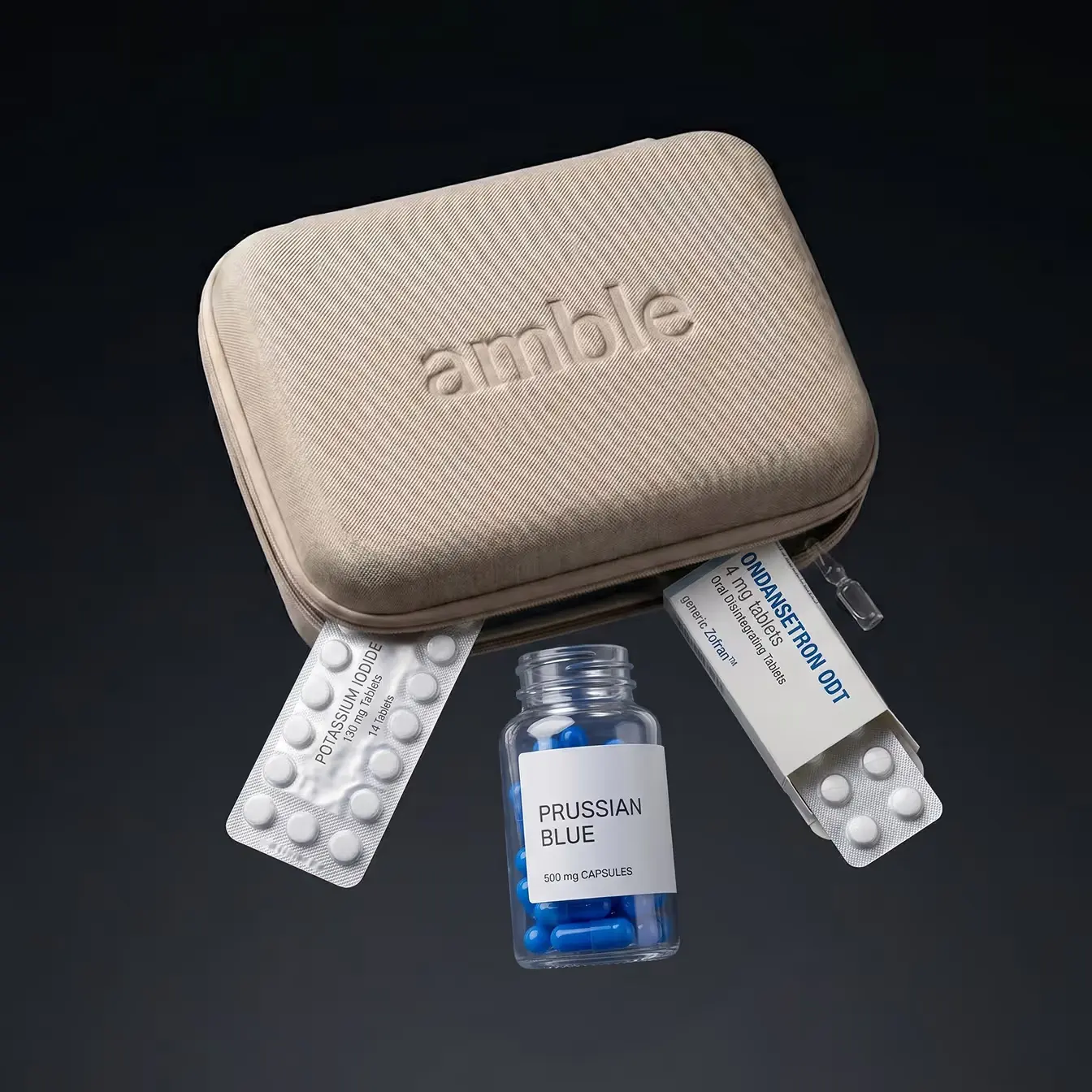
For people who want prescription medical countermeasures available as part of that preparation, ourRadiation Emergency Kit (Oh Sh*t Kit)provides provider-reviewed emergency medications in advance. A licensed medical provider reviews each request and prescribes the kit only when appropriate.
Having medication available does not change the first-response sequence. During an actual radiation emergency, get inside, stay inside and follow official instructions about whether any medication should be used.
Preparation cannot remove every risk from a radiation emergency, but it can make the first few decisions much simpler. Remember the basic sequence: get inside, stay inside and stay tuned, then follow official guidance as the situation develops.
References
https://www.ready.gov/radiation
https://www.epa.gov/radtown/radiation-emergencies-and-preparedness
https://www.epa.gov/emergencies-iaq/emergencies-and-indoor-air-quality-iaq
https://www.cdc.gov/radiation-emergencies/prevention/self-decontaminate.html
https://www.cdc.gov/radiation-emergencies/response/stay-tuned.html
https://www.cdc.gov/radiation-emergencies/treatment/potassium-iodide.html
Your questions,
answered.
What should you do first during a radiation emergency?
Get inside the nearest suitable building as quickly as possible, move away from windows and exterior walls, and stay there while following official emergency updates.
How long should you stay inside after a radiation emergency?
You may be advised to shelter indoors for at least 24 hours, but this is not an automatic all-clear. Stay inside until emergency officials tell you it is safe to leave or provide evacuation instructions.
Should you take potassium iodide during a radiation emergency?
Not automatically. Potassium iodide is appropriate only in certain radiation emergencies and should be taken only when public health officials or emergency officials or a qualified healthcare professional directs you to do so.
When should you evacuate after a radiation emergency?
Evacuate when authorities instruct you to. Follow the routes and destinations they provide, and do not return to the affected area until officials say it is safe.
Still have questions?